bloguer

Maison

bloguer

  • Liquid Nitrogen Shut‑Off Valves |‑196°C Cryogenic Isolation Valves for LN₂ Service - GEKO Valve
    Liquid Nitrogen Shut‑Off Valves |‑196°C Cryogenic Isolation Valves for LN₂ Service - GEKO Valve
    Aug 18, 2026
    Liquid Nitrogen Shut‑Off Valves: Reliable‑196°C Cryogenic Isolation for LN₂ Piping Systems   Liquid nitrogen shut‑off valves are mission‑critical hardware for cryogenic installations handling liquefied nitrogen at‑196°C. Widely referenced across engineering datasheets, project specifications and procurement documents under multiple aliases, these LN₂ isolation valves, cryogenic cut‑off valves, liquid nitrogen block valves, LN‑2 emergency shut‑down valves serve to positively isolate pipe sections, cut fluid flow, and deliver bubble‑tight sealing during normal operation, tank filling, transfer operations, routine maintenance and emergency trip conditions. Whether you search for liquid nitrogen stop valves or cryogenic isolation ball valves, the core requirement remains consistent: dependable tight shut‑off under extreme cryogenic thermal‑shock conditions. Many engineering teams interchange the naming terms: LN₂ shut‑off valve, liquid nitrogen isolation valve, cryogenic emergency shut‑off valve. While the product titles differ, they all describe the same piece of equipment installed on liquid nitrogen storage tanks, vaporiser feed lines, tanker unloading manifolds, and laboratory cryogenic supply loops. Using inconsistent aliases during sourcing often causes mis‑communication between buyers, engineering offices and valve manufacturers. Understanding these various naming conventions helps avoid ordering incorrect valves that cannot withstand‑196 °C operating temperature. Core Design Requirements for Liquid Nitrogen Shut‑Off Valves No matter if you specify them as LN₂ block valve or cryogenic stop valve, liquid nitrogen shut‑off valves must overcome unique challenges brought by cryogenic media. Low‑temperature shrinkage can affect sealing performance; moisture ingress may lead to ice formation and valve jamming. GEKO’s liquid nitrogen shut‑off valves adopt extended bonnet construction, stainless steel body, special low‑temperature compatible seat materials, and blow‑out‑proof stem design. The extended bonnet keeps packing assemblies away from ultra‑cold media, preventing packing freezing and ensuring smooth manual or automated actuation. These LN₂ isolation valves are qualified for repeated cycling under cryogenic working conditions, maintaining zero‑leak isolation performance. Typical Application Scenarios Liquid nitrogen bulk storage tank inlet & outlet: install liquid nitrogen shut‑off valves / LN₂ isolation valves for tank isolation and over‑pressure protection Cryogenic tanker truck unloading manifold: cryogenic cut‑off valves / LN‑2 emergency shut‑down valves for quick flow interruption during unexpected incidents Vaporiser upstream and downstream piping: liquid nitrogen block valves for equipment offline‑maintenance isolation Laboratory & medical cryogenic supply circuits: liquid nitrogen stop valves / cryogenic isolation ball valves for precise pipeline section control Manual vs Actuated Liquid Nitrogen Shut‑Off Valves Liquid nitrogen shut‑off valves are available in manual hand‑wheel operated versions as well as automated actuated variants. Actuated LN₂ shut‑off valves can be fitted with pneumatic or electric actuators, acting as LN‑2 emergency shut‑down valves linked to site safety interlock systems. When specifying automated models, engineers may call them actuated cryogenic cut‑off valves; functionally they perform the same isolation duty as manual liquid nitrogen block valves. GEKO supplies both manual and actuated configurations of these liquid nitrogen isolation valves to match different project safety standards.   Common Sourcing Pitfalls Caused by Different Product Aliases Procurement teams often encounter confusion because suppliers interpret names differently. For instance, a general‑purpose stop valve is not equivalent to a cryogenic‑rated liquid nitrogen stop valve. A standard ball valve cannot replace a dedicated cryogenic isolation ball valve. When issuing RFQ documents, it is best practice to use multiple aliases together: “liquid nitrogen shut‑off valve, also known as LN₂ isolation valve, cryogenic cut‑off valve, LN‑2 emergency shut‑down valve” and clearly mark‑196 °C temperature rating, to ensure vendors quote correct cryogenic‑qualified hardware rather than general‑purpose industrial valves.   Summary Known as liquid nitrogen shut‑off valves, LN₂ isolation valves, cryogenic cut‑off valves, liquid nitrogen block valves, LN‑2 emergency shut‑down valves, liquid nitrogen stop valves, cryogenic isolation ball valves, this family of cryogenic hardware is irreplaceable for safe liquid nitrogen handling. Correct recognition of all common naming variants eliminates mis‑specification and procurement errors. GEKO manufactures full‑range liquid nitrogen shut‑off valves tailored for‑196 °C cryogenic working conditions for industrial gas, energy, pharmaceutical and laboratory‑research projects.   Meta Title:Liquid Nitrogen Shut‑Off Valves |‑196°C LN₂ Isolation Valves‑GEKO Valve Meta Description:Liquid nitrogen shut‑off valves also named LN₂ isolation valve, cryogenic cut‑off valve, LN‑2 emergency shut‑down valve. GEKO‑196℃ cryogenic valves for storage tank, transfer line & vaporiser systems.
    EN SAVOIR PLUS
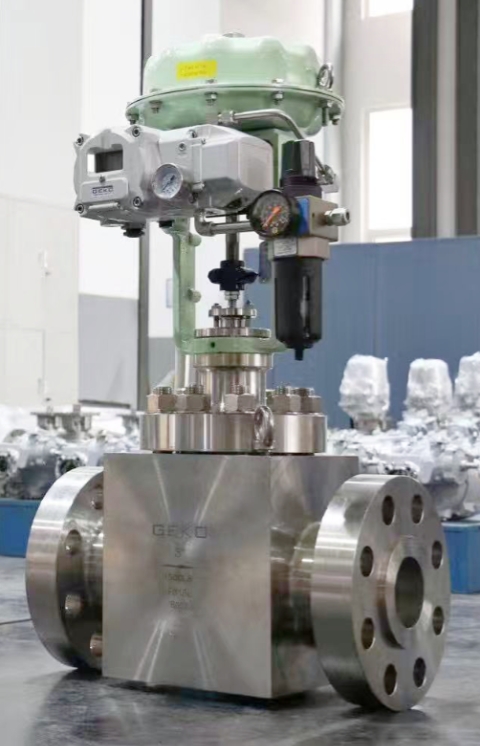
  • How to Select the Ideal Actuated Ball Valves for Automation | GEKO Valve
    How to Select the Ideal Actuated Ball Valves for Automation | GEKO Valve
    Aug 16, 2026
    How to Select the Ideal Actuated Ball Valves for Automation Actuated ball valves – also widely known as pneumatic ball valve and electric ball valve assemblies – deliver automated on/off or modulating flow control for modern industrial piping, eliminating manual operation and supporting remote SCADA, PLC and DCS integration. Choosing the right automated ball valve requires more than pairing a ball valve body with any actuator; engineers must evaluate valve construction, torque requirements, actuator type, communication signals, hazardous-area ratings and cycle life. Whether your project uses floating ball valve, trunnion mounted ball valve, full port ball valve or reduced port ball valve designs, the correct assembly balances reliability, safety and long-term uptime. GEKO Valve supplies pre-tested pneumatic actuated ball valve and motorized ball valve packages, engineered for chemical, power, water treatment, oil & gas and process automation systems. 1. Define Core Process and Automation Requirements First Start by clarifying the valve’s function: simple on/off isolation or continuous modulating control. Document flow media, operating pressure, temperature, fluid viscosity and chemical compatibility. These parameters directly determine required ball valve actuator torque, material selection and sealing type. For erosive, high-temperature or sour media, a metal seated ball valve is often necessary, while soft-seated variants suit clean, low-temperature service. Also confirm cycle frequency: intermittent batch duty demands different actuator durability than high-cycle continuous automation. When sourcing, buyers may encounter alternate industry terms including pneumatic operated ball valve and electric actuated ball valve – these refer to the same core automated ball valve categories. How to avoid misselection: Capture maximum differential pressure at shutoff, as this is the primary input for calculating breakaway ball valve actuator torque. Do not rely solely on nominal valve size to specify your pneumatic ball valve or electric ball valve. 2. Pick the Right Ball Valve Body Style and Bore Configuration The base ball valve design sets the baseline torque, flow capacity and pressure drop. A full port ball valve minimises industrial ball valve pressure drop and allows pipeline pigging, ideal for transfer lines. A reduced port ball valve is compact and cost-effective when moderate pressure loss is acceptable. A floating ball valve works well for smaller sizes and lower pressure classes, while heavy-duty trunnion mounted ball valve handles large NPS, high-pressure and high-torque applications such as pipeline ball valve automation, commonly built as pneumatic operated ball valve or motorized ball valve packages. How to avoid misselection: Match bore size to required Cv via proper ball valve Cv calculation instead of defaulting to pipe size, especially for modulating electric actuated ball valve control packages. 3. Select Actuator Type: Pneumatic Ball Valve vs Electric Ball Valve Pneumatic ball valve (also labelled pneumatic actuated ball valve / pneumatic operated ball valve) is widely preferred for fast stroking, high-torque and explosion-proof environments; they rely on instrument air and are common in chemical and refinery plants. Spring-return pneumatic variants provide fail-open or fail-close safety action. Electric ball valve, also called motorized ball valve or electric actuated ball valve, suits sites without reliable compressed air, offers precise positioning for modulating service, and integrates easily with 4–20mA, Modbus or other digital automation protocols. How to avoid misselection: Confirm available power supply or instrument air quality, and define fail-safe action early in the datasheet. Never undersize the actuator for breakaway torque at maximum operating differential pressure for either pneumatic operated ball valve or motorized ball valve. 4. Verify Torque Matching and Safety Margin Torque mismatch is one of the top failure points for automated assemblies. The actuator output torque must exceed the valve’s breakaway torque with a suitable safety margin, accounting for cold media, sticky fluids, seat friction and cyclic wear. A trunnion mounted ball valve and large pipeline ball valve require significantly higher torque than small floating ball valve units, whether configured as pneumatic ball valve or electric ball valve. Always reference manufacturer torque curves at design differential pressure, not just nominal static conditions. How to avoid misselection: Use calculated ball valve actuator torque values plus a 25%–50% safety margin for challenging service, and witness stroke testing during FAT for your pneumatic actuated ball valve or electric actuated ball valve. 5. Specify Sealing, Material and Hazardous Area Ratings Seat selection impacts automation reliability and leakage performance. Soft seats (PTFE, RTFE) deliver bubble-tight shutoff for clean media, while a metal seated ball valve handles high temperature, abrasive slurry and fire-safe requirements. Confirm body, ball and stem materials match the process fluid to prevent corrosion. For explosive environments, specify ATEX, IECEx or CSA hazardous area certification for actuators, solenoids and positioners on pneumatic operated ball valve and motorized ball valve assemblies. How to avoid misselection: Cross-check material compatibility charts and fugitive emission requirements for toxic or volatile media when selecting pneumatic ball valve or electric ball valve. 6. Define Instrument Accessories for Automation Integration Basic pneumatic actuated ball valve assemblies may only need limit switches, while closed-loop modulating control requires positioners, solenoid valves, air filter regulators and position transmitters. Limit switches provide discrete feedback to PLCs to confirm open/closed status; smart positioners deliver continuous 4–20mA or digital signal feedback for precise flow regulation. For electric actuated ball valve / motorized ball valve, auxiliary switches and modulating signal boards are common add-ons. These accessories must match the actuator type, area classification and control system protocol. How to avoid misselection: List all required feedback and control signals in the RFQ to ensure the complete pneumatic operated ball valve or electric ball valve package arrives pre-assembled, calibrated and ready for commissioning. 7. Confirm Cycle Life, Testing and Documentation High-cycle automated systems demand validated cycle life testing. Request Factory Acceptance Test (FAT) reports including stroke time, torque verification, leakage test and signal response. Reputable suppliers pre-assemble, calibrate and test the full pneumatic ball valve or electric ball valve assembly before shipment, reducing on-site alignment issues. For critical pipeline ball valve packages, witness testing and third-party inspection may be required for motorized ball valve and pneumatic actuated ball valve options. How to avoid misselection: Require MTRs, torque certificates and FAT records for all pneumatic operated ball valve and electric actuated ball valve packages. Step-by-Step Selection Workflow for Actuated Ball Valves Define function: on/off isolation or modulating control, plus fail-safe requirement; choose between pneumatic ball valve or electric ball valve Collect process data for ball valve Cv calculation and torque estimation Choose valve style: floating ball valve or trunnion mounted ball valve; select full port ball valve or reduced port ball valve Select seat type: soft-seated or metal seated ball valve Pick actuator package: pneumatic actuated ball valve / pneumatic operated ball valve or electric actuated ball valve / motorized ball valve, sized for required ball valve actuator torque Add accessories: solenoid, positioner, limit switches, filter regulator as needed Validate industrial ball valve pressure drop, area certification and material compatibility Specify FAT, stroke testing and documentation before order release How GEKO Valve Supports Automated Ball Valve Packages GEKO Valve supplies fully assembled and tested pneumatic ball valve and electric ball valve packages for industrial automation. Our portfolio includes pneumatic actuated ball valve / pneumatic operated ball valve as well as electric actuated ball valve / motorized ball valve, built on floating ball valve and heavy-duty trunnion mounted ball valve platforms, available as full port ball valve or reduced port ball valve, with soft-seat and robust metal seated ball valve configurations. We complete ball valve Cv calculation and torque verification to match ball valve actuator torque to your actual process differential pressure, including critical pipeline ball valve automation packages. Every pneumatic operated ball valve and motorized ball valve assembly is stroke-tested prior to dispatch, helping integrators and plant teams reduce commissioning delays and control unwanted industrial ball valve pressure drop. Final Selection Checklist Clarify on/off or modulating control plus fail-safe position requirement; select pneumatic ball valve or electric ball valve Run ball valve Cv calculation and confirm industrial ball valve pressure drop Select floating ball valve or trunnion mounted ball valve; specify full port ball valve or reduced port ball valve Choose soft seat or metal seated ball valve based on media, temperature and leakage limits Size actuator with validated ball valve actuator torque and adequate safety margin for pneumatic actuated ball valve or electric actuated ball valve Add required positioners, solenoids or limit switches for PLC/SCADA automation on pneumatic operated ball valve or motorized ball valve Confirm hazardous area certification and FAT for critical pipeline ball valve assemblies Properly specified pneumatic ball valve and electric ball valve assemblies deliver stable, repeatable automated flow control, reduce manual intervention and support safer, more efficient process plant operation.  
    EN SAVOIR PLUS
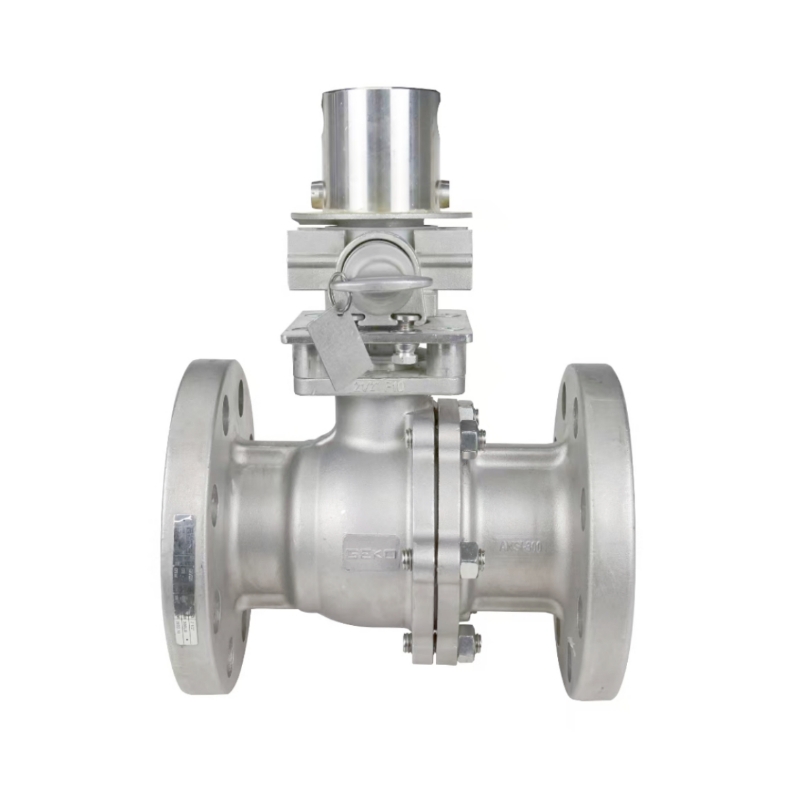
  • Common Ball Valve Sizing Mistakes and How to Avoid Them | GEKO Valve
    Common Ball Valve Sizing Mistakes and How to Avoid Them | GEKO Valve
    Aug 16, 2026
    Common Ball Valve Sizing Mistakes and How to Avoid Them Improper ball valve sizing ranks among the most frequent root causes of poor process performance, premature seat wear, excessive pressure drop, cavitation, noise, and unplanned plant shutdowns. Many engineers and procurement teams rely on nominal pipe size matching alone instead of calculated flow capacity, fluid properties, velocity limits and pressure differential. Whether specifying floating ball valve, trunnion mounted ball valve, full port ball valve or reduced port ball valve variants, correct sizing balances shutoff integrity, flow stability, actuator performance and total cost of ownership. GEKO Valve supports accurate sizing with ball valve Cv calculation, bore selection guidance and application-specific engineering review for industrial, chemical, power and oil & gas piping systems, including heavy-duty pipeline ball valve assemblies. Mistake 1: Sizing Only by Nominal Pipe Size, Ignoring Cv and Pressure Drop The most widespread error is automatically selecting a ball valve with the same nominal size as the adjacent pipe without completing a proper ball valve Cv calculation. Nominal size does not directly define flow capacity; a full port ball valve and reduced port ball valve of the same NPS deliver drastically different Cv values. This oversight leads to two costly outcomes: oversizing or undersizing, and directly impacts industrial ball valve pressure drop across the piping circuit.   How to avoid: Start with process data — flow rate, inlet/outlet pressure, operating temperature, fluid density and viscosity — then compute required Cv. Match the calculated Cv to the valve’s published Cv rating, not merely pipe diameter. Mistake 2: Confusing Full Port and Reduced Port Cv Ratings Buyers often assume a given NPS ball valve will deliver full-bore flow capacity, only to discover the selected reduced-port (standard-port) design has a much smaller internal bore and lower Cv. Reduced bore ball valves are lighter and less expensive, but they create higher industrial ball valve pressure drop and may restrict pigging operations for pipeline ball valve installations. How to avoid: Clearly specify full port ball valve vs reduced port ball valve on your datasheet. Require published Cv for the exact bore configuration. Select full port for pigging, low-loss transfer lines and high-flow isolation; reduced port is acceptable when pressure loss can be tolerated and cost/weight optimisation is needed. Mistake 3: Oversizing Control Ball Valves Oversized ball valves for modulating service operate at very low travel, often 10–20% open. This creates unstable hunting, poor controllability, accelerated seat erosion from high local velocity, and larger, more expensive actuators than necessary. Many specifiers oversize “for safety margin” without flow simulation, a risk that applies equally to floating ball valve and trunnion mounted ball valve designs. How to avoid: Target an operating travel of 40–70% under normal design flow. Reserve safety margin in the engineering calculation rather than arbitrarily upsizing the valve body. Confirm ball valve actuator torque at the actual operating differential pressure, not just maximum system pressure. Mistake 4: Undersizing and Exceeding Safe Fluid Velocity An undersized ball valve becomes a flow bottleneck, raising velocity, turbulence, noise, erosion, cavitation for liquids and choked flow for compressible media. This damages seats, balls and trim while forcing pumps or compressors to consume extra power. The risk of seat degradation is especially pronounced for metal seated ball valve styles used in high-velocity abrasive media. How to avoid: Apply industry velocity limits for liquid, gas and steam. Check for cavitation and choked flow conditions early in the specification phase. If high velocity cannot be eliminated with a larger bore, consider staged pressure reduction or anti-cavitation trim, particularly for metal seated ball valve selections. Mistake 5: Treating Gas / Steam Sizing the Same as Liquid Sizing Liquid sizing formulas do not work for compressible fluids. Gas, vapour and steam change density with pressure, so choked flow and expansion factors must be included. Using liquid Cv methods for gas services produces dangerously wrong sizing results, which will skew your ball valve Cv calculation and inflate industrial ball valve pressure drop. How to avoid: Use compressible-fluid sizing equations for gas and steam. Distinguish between non-choked and choked flow regimes and verify outlet pressure and critical pressure ratio. Mistake 6: Ignoring Face-to-Face Dimensions During Replacement Sizing Even when NPS and pressure class match, inconsistent face-to-face or end-to-end dimensions create fit-up issues during retrofit. This common error delays commissioning and requires rework or spool piece modifications for any floating ball valve, trunnion mounted ball valve or pipeline ball valve replacement. How to avoid: Reference ASME B16.10 and confirm face-to-face length, end connection type — flanged, threaded, butt-weld — and flange standard before ordering replacement ball valves. Mistake 7: Forgetting Pressure Class and Temperature Derating Selecting a valve based only on ambient pressure rating without reviewing pressure-temperature derating is a safety risk. ASME B16.34 ratings fall as temperature rises, and the valve must remain suitable at maximum operating temperature, not just cold conditions — this rule applies to soft-seated and metal seated ball valve models alike. How to avoid: Derate the valve using the applicable pressure-temperature table and confirm the valve’s rating covers the worst-case operating point. Mistake 8: Neglecting Actuator Torque Matching With Actual Differential Pressure Sizing the valve body correctly but under-sizing the actuator is a frequent oversight. Breakaway torque depends on seat friction, media pressure and temperature, not just nominal size. Inadequate ball valve actuator torque leads to slow operation, failure to stroke or incomplete shutoff. How to avoid: Request torque curves at design and maximum differential pressure. Include safety margin for cold start, high viscosity media and cyclic service. Verify ball valve actuator torque output against breakaway and running torque values for your trunnion mounted ball valve or floating ball valve. Proven Ball Valve Sizing Workflow for Engineers & Buyers Collect complete process data: flow, P1, P2, temperature, fluid type, density, viscosity, vapour pressure Define service goal: isolation only or modulating control Calculate required Cv with formal ball valve Cv calculation and check velocity, cavitation or choked flow risk Select full port ball valve or reduced port ball valve and verify published Cv for that exact bore Confirm pressure class, material, pressure-temperature derating and face-to-face dimension; specify metal seated ball valve if high-temperature or erosive service is expected Size actuator using actual differential pressure ball valve actuator torque values Validate with the manufacturer’s application engineering before RFQ release, especially for critical pipeline ball valve projects How GEKO Valve Prevents Sizing Errors GEKO Valve’s engineering team reviews process parameters upfront to avoid the most common ball valve sizing pitfalls. We provide Cv data for full port ball valve and reduced port ball valve, trunnion mounted ball valve and floating ball valve, torque verification, ASME/API dimensional compliance and material selection aligned with fluid chemistry and temperature, including robust metal seated ball valve and pipeline ball valve options. Our pre-order sizing review catches oversize/undersize issues, velocity hazards and ball valve actuator torque mismatches before fabrication begins, reducing site rework and extending valve service life while controlling unwanted industrial ball valve pressure drop through accurate ball valve Cv calculation. Final Sizing Checklist Calculate Cv from process data with proper ball valve Cv calculation, do not default to pipe size Explicitly specify full port ball valve or reduced port ball valve Check liquid cavitation and gas choked flow conditions; select metal seated ball valve where needed Validate safe fluid velocity to reduce erosion, noise and excess industrial ball valve pressure drop Derate pressure class at maximum operating temperature Match ball valve actuator torque to actual operating differential pressure Confirm face-to-face length and end connection standard for retrofit of floating ball valve, trunnion mounted ball valve or pipeline ball valve By moving beyond simple pipe-size matching and adopting data-driven ball valve sizing, project teams deliver stable flow control, minimise wear and noise, and avoid expensive rework after installation. SEO Keywords: floating ball valve, trunnion mounted ball valve, full port ball valve, reduced port ball valve, ball valve Cv calculation, industrial ball valve pressure drop, ball valve actuator torque, metal seated ball valve, pipeline ball valve
    EN SAVOIR PLUS
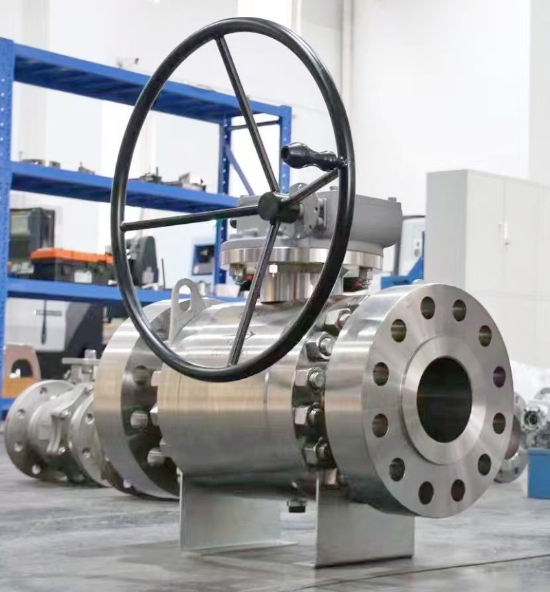
  • Evaluating Quality Standards Before Buying Industrial Ball Valves | GEKO Valve
    Evaluating Quality Standards Before Buying Industrial Ball Valves | GEKO Valve
    Aug 15, 2026
    Evaluating Quality Standards Before Buying Industrial Ball Valves Procuring industrial ball valves without proper assessment of applicable quality standards creates hidden operational risks, including fugitive emissions, seat leakage, premature component failure, and costly unplanned downtime. Ball valves serve critical isolation and flow control duties across oil and gas, chemical processing, power generation, wastewater, and pulp & paper plants. For specifiers, project engineers and procurement managers, verifying relevant industry standards is the most reliable way to confirm sealing integrity, material robustness, pressure-temperature ratings and regulatory compliance. GEKO Valve manufactures industrial ball valves aligned with global recognised standards to satisfy rigorous process conditions.   Primary Global Standards for Industrial Ball Valves Standards define uniform rules for valve design, material selection, dimensional control, pressure testing, marking and certification. Project specifications must identify mandatory standards before awarding purchase orders. API 6D: Core standard for pipeline ball valves, covering design limits, fire-safe construction, end-to-end dimensions, factory testing and traceability for oil & gas transmission pipelines. ASME B16.34: Establishes pressure-temperature ratings, defining maximum allowable working pressure at elevated or reduced temperatures for carbon steel, stainless steel and alloy valve bodies. ASME B16.10: Governs face-to-face and end-to-end valve dimensions, enabling interchangeability for retrofit replacement and new piping layouts. API 607 / API 6FA Fire-Safe Standards: Fire-safe qualification ensures ball valves retain controlled shut-off capability during fire events, essential for flammable liquid and gas services. ISO 12266: International standard for industrial valve pressure testing, including shell hydrostatic testing and seat leakage testing with defined acceptable leakage thresholds. MSS SP-61: Specifies permissible seat leakage rates for metal-seated ball valves, widely referenced for tight-shutoff high-pressure process applications. NACE MR0175 / ISO 15156: Sour service standard for media containing hydrogen sulfide (H₂S), protecting against sulfide stress cracking in refinery and upstream oil & gas systems. Essential Quality Verification Beyond Standard Markings A standard stamp on a valve body is not sufficient proof of consistent quality. Procurement teams should validate supporting technical documentation alongside formal specifications. Material Traceability & MTRs: Request Material Test Reports for the valve body, ball, stem and internal trim. MTRs verify heat numbers, chemical composition and mechanical properties, preventing substitution risks for WCB, A105, stainless steel and alloy construction. Factory Acceptance Test (FAT) Documentation: Shell pressure tests, seat leakage tests, cycle endurance tests and actuator functional test reports should be available on request. Metal-seated ball valves operate under stricter leakage limits compared to soft-seated variants and require formal recorded test results. Third-Party Fire-Safe Certification: For fire-hazardous process areas, prioritise independent third-party fire-safe certificates instead of manufacturer self-declarations. Witness Inspection Support: Trusted valve manufacturers accommodate third-party witness inspection at their facility as required by EPC and end-user project specifications. Risks of Skipping Quality Standard Evaluation Many buyers focus only on upfront pricing and delivery lead time while ignoring standard compliance validation. Non-compliant ball valves may pass simple visual checks yet fail under cyclic pressure, thermal shock or corrosive media. Consequences include fugitive emissions, seat blow-by, stem packing leakage, body wall rupture during operation, safety system malfunction and commissioning rejection. The expense of replacement, plant shutdown and process cleanup far outweighs any short-term savings from low-spec valves. How GEKO Valve Delivers Standard-Compliant Ball Valves GEKO industrial ball valves are engineered to meet API 6D, ASME B16.34, ASME B16.10, ISO and NACE sour service criteria for fire-safe, cryogenic, high-temperature and corrosive fluid applications. Complete MTRs, test certificates and compliance documentation are supplied with every shipment. Our engineering team assists buyers during RFQ and specification phases to match process operating conditions to the correct set of industry standards, helping eliminate specification errors before order confirmation. Buyer’s Pre-Purchase Checklist Document all mandatory industry standards within your technical specification Validate material test reports for all pressure-retaining components Clarify seat leakage requirements: soft-seat versus metal-seated performance limits Confirm if fire-safe or NACE sour service certification is mandatory for the project Check availability of FAT and client witness inspection options Verify permanent valve marking includes size, pressure class, material grade and referenced standards Systematically evaluating quality standards and supporting documentation before purchasing industrial ball valves helps plant operators mitigate safety hazards, extend valve service life and maintain stable, reliable performance throughout critical industrial piping networks.  
    EN SAVOIR PLUS
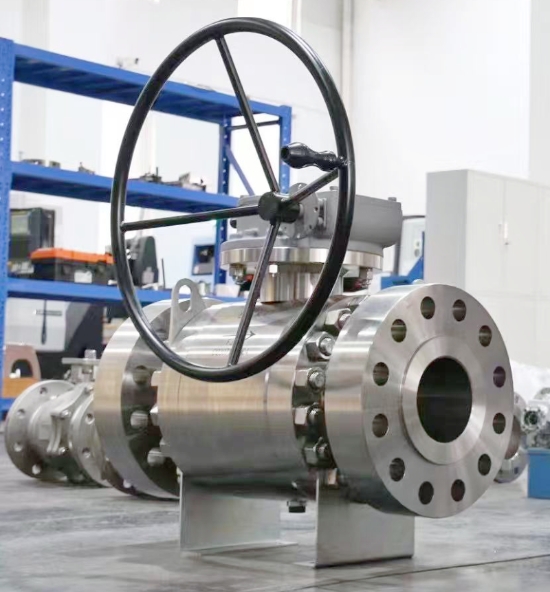
  • How to Match Ball Valve Specifications with Flow Requirements | Flow Rate & Pressure Drop Selection Guide
    How to Match Ball Valve Specifications with Flow Requirements | Flow Rate & Pressure Drop Selection Guide
    Aug 14, 2026
    How to Match Ball Valve Specifications with Flow Requirements Flow capacity is one of the most fundamental parameters that determine whether a ball valve can operate stably within a piping system. Improper specification matching will result in excessive pressure drop, insufficient fluid throughput, pump overload, energy waste, medium sediment blockage, and even system vibration and safety risks. Many procurement engineers only confirm nominal diameter DN/NPS and pressure class while ignoring internal bore geometry, ball core structure, sealing clearance, flow coefficient Cv and medium viscosity factors, which leads to valve mismatch after installation. This guide systematically explains how each ball valve technical parameter influences flow performance, clarifies professional terminology aliases, and provides step-by-step rules to select the right valve structure, bore type, body size and internal trim according to actual flow demands for liquid, gas, steam, slurry and cryogenic media. 1. Core Terminology: Key Flow Parameters & Industry Aliases Before specification matching, it is necessary to unify the professional terms commonly used in global valve and fluid mechanics industries: Cv Value: Flow coefficient, also called valve flow capacity, the most direct index to measure fluid passing ability Pressure Drop: Head loss, differential pressure loss across the fully opened valve Full Port / Full Bore: Equal bore, through bore, full flow passage ball valve Reduced Port / Reduced Bore: Restricted bore, constricted orifice, partial bore ball valve Flow Turbulence: Eddy current loss caused by sudden shrinkage of the internal channel Cavitation: Vaporization and bubble collapse inside the valve under high differential pressure for liquid service 2. How Bore Type Determines Basic Flow Capacity The internal opening of the ball is the biggest factor affecting Cv value and pressure drop, which we have elaborated in the previous comparison article: 2.1 Full Bore (Full Port) Ball Valve for High-Flow Demands The inner diameter of the ball passage is completely consistent with the pipeline inner diameter, forming a straight unobstructed flow path. Highest Cv value among the same nominal size, minimal pressure loss No dead angle for medium deposition, suitable for high-volume circulation, viscous liquid, slurry, crude oil and LNG cryogenic fluid Supplies pipeline pigging operation, mandatory for long-distance main transmission pipelines Applicable structure: Full bore trunnion mounted ball valve for large size high-pressure process lines 2.2 Reduced Bore (Reduced Port) Ball Valve for Low-Flow Branch Lines The ball orifice is 1–2 sizes smaller than nominal pipe size, creating a contracted flow channel. Lower Cv value, obvious turbulence and pressure drop during fluid transportation Smaller ball core reduces operating torque, matches smaller pneumatic or electric actuators Economical for instrument air, sampling loops, HVAC water, and auxiliary low-flow isolation points Not allowed for media prone to crystallization, scaling and solid particle clogging 3. Valve Body Structure Impacts Flow Resistance 3.1 Floating Ball Valve vs Trunnion Mounted Ball Valve Under the same bore size, trunnion mounted ball valves adopt upper and lower shaft positioning structure with smaller sealing friction, smoother internal flow streamline and slightly higher effective Cv value. They are the preferred type for large diameter, high flow rate and high pressure working conditions. Floating ball valves are mostly used in small-bore DN15-DN100 general service, with acceptable flow performance for low and medium flow requirements. 3.2 One Piece / Two Piece / Three Piece Body Structure Two-piece ball valve: Smooth internal casting transition, standard flow resistance for most industrial flow scenarios Three-piece ball valve: Split body with more internal assembly gaps, slightly higher minor flow loss, mainly selected for easy maintenance rather than flow optimization One-piece forged ball valve: Compact inner cavity, used for tiny flow instrument tubing only 4. Sealing Material & Trim Design Affect Effective Flow Area Different seat thickness and sealing protruding amount will occupy part of the flow channel and change actual flow capacity: PTFE/RPTFE soft seat ball valve: Thin ring-shaped seat occupies little inner space, maximum effective flow area and high Cv value, ideal for clean liquid and gas large-flow systems PEEK reinforced seat ball valve: Thicker wear-resistant seat reduces partial passage size, slightly decreases flow coefficient, suitable for abrasive corrosive media with moderate flow demand STL hardfacing metal seated ball valve: The overlay welding layer increases ball surface thickness, small flow attenuation, adopted for high-temperature steam and high-pressure abrasive fluid where flow rate is secondary to durability 5. Medium Characteristics Require Targeted Specification Matching 5.1 Liquid Media (Water, Chemical Solvents, Oil) - High flow water circulation, cooling system: Full bore flanged ball valve to cut pump energy consumption - High-viscosity crude oil, syrup, slurry: Full bore trunnion ball valve to avoid flow blockage - Low-flow chemical dosing: Reduced bore small-size threaded ball valve 5.2 Gas & Compressed Air - Main compressed air header: Full bore design to lower pressure drop in long-distance gas transmission - Branch instrument gas points: Reduced bore compact ball valve for cost control 5.3 Steam & High-Temperature Fluid Saturated and superheated steam produces large volume expansion, must calculate flow Cv under high temperature; prefer full bore metal seated ball valve to prevent seal deformation and flow narrowing caused by thermal expansion. 5.4 Cryogenic Media (LNG, Liquid Nitrogen) Low-temperature liquefied gas has strict flow stability requirements, only full bore fixed trunnion ball valve is permitted to eliminate two-phase flow impact and cavitation damage. 6. Step-by-Step Standard Matching Workflow Calculate required maximum flow rate and allowable maximum pressure drop of the loop Determine minimum Cv value the valve needs to reach, select full bore or reduced bore accordingly Confirm medium type, viscosity, temperature and particle content to lock body material and sealing configuration Choose floating or trunnion structure based on nominal size and pressure class Match end connections (flanged, BW, SW, threaded) and actuator type according to on-site layout Verify cavitation risk for high differential pressure liquid service and add anti-cavitation trim if necessary 7. Common Specification Mismatch Pitfalls Using reduced bore ball valves on main high-flow process pipelines, leading to excessive head loss and increased operating electricity cost Selecting thick PEEK hard seats for large-flow clean water systems, unnecessarily reducing effective Cv value Specifying floating ball valves for DN200 and above large-diameter high-flow lines, resulting in excessive operating torque and actuator overload Ignoring cavitation in high-pressure liquid pipelines, causing internal trim erosion and continuous flow fluctuation Conclusion Matching ball valve specifications with flow requirements is centered on quantifiable indicators such as Cv flow coefficient and pressure drop. The core selection logic is: adopt full bore full flow trunnion mounted ball valves for large-flow, low pressure loss, pigging-required and particle-containing media; deploy economical reduced bore ball valves for small-flow auxiliary branches and instrument pipelines. Meanwhile, coordinate body structure, seat material, trim design and medium properties together to guarantee stable, efficient and energy-saving fluid transportation for the whole piping system. GEKO Valve provides full bore and reduced bore ball valves in floating & trunnion designs, with complete Cv flow parameter test data, multiple sealing options and material grades, to support precise flow specification matching for power, petrochemical, cryogenic, chemical and water treatment projects.  
    EN SAVOIR PLUS

  • How to Match Ball Valve Specifications with Flow Requirements
    How to Match Ball Valve Specifications with Flow Requirements
    Aug 12, 2026
    How to Match Ball Valve Specifications with Flow Requirements Flow capacity is one of the most fundamental parameters that determine whether a ball valve can operate stably within a piping system. Improper specification matching will result in excessive pressure drop, insufficient fluid throughput, pump overload, energy waste, medium sediment blockage, and even system vibration and safety risks. Many procurement engineers only confirm nominal diameter DN/NPS and pressure class while ignoring internal bore geometry, ball core structure, sealing clearance, flow coefficient Cv and medium viscosity factors, which leads to valve mismatch after installation. This guide systematically explains how each ball valve technical parameter influences flow performance, clarifies professional terminology aliases, and provides step-by-step rules to select the right valve structure, bore type, body size and internal trim according to actual flow demands for liquid, gas, steam, slurry and cryogenic media. 1. Core Terminology: Key Flow Parameters & Industry Aliases Before specification matching, it is necessary to unify the professional terms commonly used in global valve and fluid mechanics industries: Cv Value: Flow coefficient, also called valve flow capacity, the most direct index to measure fluid passing ability Pressure Drop: Head loss, differential pressure loss across the fully opened valve Full Port / Full Bore: Equal bore, through bore, full flow passage ball valve Reduced Port / Reduced Bore: Restricted bore, constricted orifice, partial bore ball valve Flow Turbulence: Eddy current loss caused by sudden shrinkage of the internal channel Cavitation: Vaporization and bubble collapse inside the valve under high differential pressure for liquid service 2. How Bore Type Determines Basic Flow Capacity The internal opening of the ball is the biggest factor affecting Cv value and pressure drop, which we have elaborated in the previous comparison article: 2.1 Full Bore (Full Port) Ball Valve for High-Flow Demands The inner diameter of the ball passage is completely consistent with the pipeline inner diameter, forming a straight unobstructed flow path. Highest Cv value among the same nominal size, minimal pressure loss No dead angle for medium deposition, suitable for high-volume circulation, viscous liquid, slurry, crude oil and LNG cryogenic fluid Supplies pipeline pigging operation, mandatory for long-distance main transmission pipelines Applicable structure: Full bore trunnion mounted ball valve for large size high-pressure process lines 2.2 Reduced Bore (Reduced Port) Ball Valve for Low-Flow Branch Lines The ball orifice is 1–2 sizes smaller than nominal pipe size, creating a contracted flow channel. Lower Cv value, obvious turbulence and pressure drop during fluid transportation Smaller ball core reduces operating torque, matches smaller pneumatic or electric actuators Economical for instrument air, sampling loops, HVAC water, and auxiliary low-flow isolation points Not allowed for media prone to crystallization, scaling and solid particle clogging 3. Valve Body Structure Impacts Flow Resistance 3.1 Floating Ball Valve vs Trunnion Mounted Ball Valve Under the same bore size, trunnion mounted ball valves adopt upper and lower shaft positioning structure with smaller sealing friction, smoother internal flow streamline and slightly higher effective Cv value. They are the preferred type for large diameter, high flow rate and high pressure working conditions. Floating ball valves are mostly used in small-bore DN15-DN100 general service, with acceptable flow performance for low and medium flow requirements. 3.2 One Piece / Two Piece / Three Piece Body Structure Two-piece ball valve: Smooth internal casting transition, standard flow resistance for most industrial flow scenarios Three-piece ball valve: Split body with more internal assembly gaps, slightly higher minor flow loss, mainly selected for easy maintenance rather than flow optimization One-piece forged ball valve: Compact inner cavity, used for tiny flow instrument tubing only 4. Sealing Material & Trim Design Affect Effective Flow Area Different seat thickness and sealing protruding amount will occupy part of the flow channel and change actual flow capacity: PTFE/RPTFE soft seat ball valve: Thin ring-shaped seat occupies little inner space, maximum effective flow area and high Cv value, ideal for clean liquid and gas large-flow systems PEEK reinforced seat ball valve: Thicker wear-resistant seat reduces partial passage size, slightly decreases flow coefficient, suitable for abrasive corrosive media with moderate flow demand STL hardfacing metal seated ball valve: The overlay welding layer increases ball surface thickness, small flow attenuation, adopted for high-temperature steam and high-pressure abrasive fluid where flow rate is secondary to durability 5. Medium Characteristics Require Targeted Specification Matching 5.1 Liquid Media (Water, Chemical Solvents, Oil) - High flow water circulation, cooling system: Full bore flanged ball valve to cut pump energy consumption - High-viscosity crude oil, syrup, slurry: Full bore trunnion ball valve to avoid flow blockage - Low-flow chemical dosing: Reduced bore small-size threaded ball valve 5.2 Gas & Compressed Air - Main compressed air header: Full bore design to lower pressure drop in long-distance gas transmission - Branch instrument gas points: Reduced bore compact ball valve for cost control 5.3 Steam & High-Temperature Fluid Saturated and superheated steam produces large volume expansion, must calculate flow Cv under high temperature; prefer full bore metal seated ball valve to prevent seal deformation and flow narrowing caused by thermal expansion. 5.4 Cryogenic Media (LNG, Liquid Nitrogen) Low-temperature liquefied gas has strict flow stability requirements, only full bore fixed trunnion ball valve is permitted to eliminate two-phase flow impact and cavitation damage. 6. Step-by-Step Standard Matching Workflow Calculate required maximum flow rate and allowable maximum pressure drop of the loop Determine minimum Cv value the valve needs to reach, select full bore or reduced bore accordingly Confirm medium type, viscosity, temperature and particle content to lock body material and sealing configuration Choose floating or trunnion structure based on nominal size and pressure class Match end connections (flanged, BW, SW, threaded) and actuator type according to on-site layout Verify cavitation risk for high differential pressure liquid service and add anti-cavitation trim if necessary 7. Common Specification Mismatch Pitfalls Using reduced bore ball valves on main high-flow process pipelines, leading to excessive head loss and increased operating electricity cost Selecting thick PEEK hard seats for large-flow clean water systems, unnecessarily reducing effective Cv value Specifying floating ball valves for DN200 and above large-diameter high-flow lines, resulting in excessive operating torque and actuator overload Ignoring cavitation in high-pressure liquid pipelines, causing internal trim erosion and continuous flow fluctuation Conclusion Matching ball valve specifications with flow requirements is centered on quantifiable indicators such as Cv flow coefficient and pressure drop. The core selection logic is: adopt full bore full flow trunnion mounted ball valves for large-flow, low pressure loss, pigging-required and particle-containing media; deploy economical reduced bore ball valves for small-flow auxiliary branches and instrument pipelines. Meanwhile, coordinate body structure, seat material, trim design and medium properties together to guarantee stable, efficient and energy-saving fluid transportation for the whole piping system. GEKO Valve provides full bore and reduced bore ball valves in floating & trunnion designs, with complete Cv flow parameter test data, multiple sealing options and material grades, to support precise flow specification matching for power, petrochemical, cryogenic, chemical and water treatment projects.  
    EN SAVOIR PLUS
  • Sourcing Corrosion Resistant Ball Valves for Harsh Chemical Environments | GEKO Valve
    Sourcing Corrosion Resistant Ball Valves for Harsh Chemical Environments | GEKO Valve
    Aug 12, 2026
    Sourcing Corrosion Resistant Ball Valves for Harsh Chemical Environments   Chemical processing plants, desalination facilities, offshore platforms, wastewater treatment stations and mineral processing factories operate with aggressive acidic, alkaline, chloride-rich, oxidizing and brine media. Ordinary carbon steel or standard 304 stainless steel ball valves will suffer pitting, crevice corrosion, stress corrosion cracking and rapid wall thinning within a short service cycle, triggering fluid leakage, pipeline shutdown and even safety hazards. Therefore, sourcing professional corrosion resistant ball valves tailored for harsh chemical working conditions becomes a core procurement task for process engineers and project purchasers. Corrosion resistant ball valves also go by multiple industry aliases in global procurement markets: chemical resistant ball valves, anti-corrosion ball valves, aggressive media service ball valves, acid and alkali resistant ball valves, chloride resistant ball valves. This guide systematically sorts out body alloy grades, internal trim materials, sealing configurations, structural designs and compliance standards you need to verify during inquiry, helping you lock in durable, cost-effective anti-corrosion valve solutions.   1. Core Corrosion Resistant Body Materials for Harsh Chemical Service The valve body is the primary pressure-bearing barrier against corrosive fluids. Different alloy materials have completely different resistance to acids, alkalis, salt water and chemical solvents. Below are all mainstream grades with their alternative designations and applicable media: 1.1 316 / 316L Austenitic Stainless Steel Ball Valve Common names: A182 F316 ball valve, molybdenum alloy stainless steel ball valve. The molybdenum component greatly improves resistance to chloride ions, dilute sulfuric acid, phosphoric acid and salt spray. 316L low-carbon version avoids intergranular corrosion after welding, widely used in general chemical dosing lines, wastewater and mild corrosive organic solvents. It is the baseline anti-corrosion option for medium-level chemical environments. 1.2 2205 Duplex Stainless Steel Ball Valve Alias: UNS S32205 duplex steel ball valve, two-phase stainless steel ball valve. Balances high mechanical strength and outstanding chloride corrosion resistance, effectively resists brine, brackish water, seawater and moderate acid-alkali solutions. It outperforms 316 stainless steel in anti-pitting and anti-stress cracking performance, the standard choice for desalination and coastal chemical plants.   1.3 2507 Super Duplex Stainless Steel Ball Valve Alias: UNS S32750 super duplex ball valve. Higher chromium, molybdenum and nitrogen content than 2205 duplex steel, suitable for concentrated brine, high-temperature seawater and heavily polluted chemical wastewater. It serves offshore marine engineering and harsh salt-rich process piping.   1.4 High Nickel Alloy Ball Valves (Super Alloys) Hastelloy C276 Ball Valve: Resists strong oxidizing acids, chlorine gas, hypochlorite and mixed corrosive chemical mixtures, ideal for pesticide, chlor-alkali and fine chemical industries Inconel 625 Ball Valve: Excellent resistance to high-temperature corrosive media and thermal fatigue, applied in high-temperature chemical reaction kettle export pipelines Monel 400 Ball Valve: Superior resistance to hydrofluoric acid, alkaline solutions and seawater, the exclusive material for HF acid processing systems 1.5 Lined Corrosion Resistant Ball Valves (Cost-Effective Alternative) For strong corrosive media such as concentrated hydrochloric acid, hydrofluoric acid and strong oxidants, alloy materials are too costly. Lined ball valves use carbon steel or cast steel outer shell with full internal lining as the anti-corrosion layer: PTFE Lined Ball Valve (Teflon lined ball valve) PFA Lined Ball Valve, FEP Lined Ball Valve, Rubber Lined Ball Valve The lining completely isolates the metal substrate from corrosive fluid, achieving full chemical inertness and significantly lowering procurement budget for large-bore chemical pipelines. 2. Anti-Corrosion Trim & Sealing Material Matching Even with premium alloy bodies, improper ball and seat materials will lead to premature failure in harsh chemical environments. Internal trim and sealing components must be chemically compatible with the flowing medium: PTFE / RPTFE Lined Seat Ball Valve: Universal chemical inertness against most acids, alkalis and organic solvents, bubble tight shut-off at ambient and moderate temperature PEEK Seat Corrosion Resistant Ball Valve: Combines chemical resistance with wear resistance, suitable for corrosive media containing solid particles and crystal precipitates STL Stellite Hardfaced Metal Seated Alloy Ball Valve: STL6 / STL12 overlay welding on ball and seat surface, for high-temperature corrosive steam, abrasive chemical slurry and flammable hazardous fluids requiring fire-safe compliance Alloy Trim Ball Core: Ball and stem forged from the same grade as the valve body (Duplex 2205, Hastelloy C276, Monel 400) to eliminate galvanic corrosion caused by dissimilar metal contact 3. Structural Design Features Optimized for Chemical Corrosive Pipelines 3.1 Bore Type Selection Full Bore / Full Port Corrosion Resistant Ball Valve: Minimizes pressure drop, prevents sediment buildup and scaling inside the channel, perfect for viscous, crystallizable and solid-containing chemical fluids Reduced Bore / Restricted Port Anti-Corrosion Ball Valve: Compact size for small-bore sampling lines, instrument branch pipelines and low-flow chemical dosing points 3.2 Body Split Structure Three Piece Corrosion Resistant Ball Valve: Easy to disassemble for internal lining inspection, seat replacement and pipeline flushing, convenient for regular maintenance of chemical process equipment Two Piece Integrated Alloy Ball Valve: Rigid structure, fewer leakage points for high-pressure closed-loop chemical reaction systems 3.3 End Connection Forms Flanged RF corrosion resistant ball valve, Butt Weld BW alloy ball valve, Socket Weld SW lined ball valve, Tri-Clamp sanitary anti-corrosion ball valve for pharmaceutical and food-grade corrosive additives. 3.4 Safety Auxiliary Configurations for Hazardous Chemicals - Blow-out proof stem structure - Anti-static device for flammable and explosive chemical vapor - Locking device to avoid misoperation - Double Block and Bleed (DBB) function for toxic media isolation - Fire-safe design in accordance with API 607 standard 4. Critical Certifications Required for Chemical Industry Projects When sourcing for global chemical plants, verify these mandatory documents to pass third-party inspection: 1. Material Test Report (MTR) with heat number traceability for alloy and superalloy bodies 2. API 6D certification for petrochemical and chemical heavy-duty transmission lines 3. CE PED module certification for EU market import clearance 4. Fire-safe test certificate API 607 5. Non-destructive testing (NDT) report for alloy valve casting and forging parts 5. Common Costly Sourcing Errors to Avoid Specify SS304 stainless steel ball valve for seawater and chloride-rich media, resulting in rapid pitting corrosion Use ordinary PTFE seats for high-temperature strong oxidizing chemicals, causing lining decomposition and medium leakage Select dissimilar metal ball and stem materials, triggering galvanic corrosion inside the valve cavity Choose reduced bore design for crystallization-prone chemical fluids, leading to pipeline blockage and system overpressure Omit MTR material certificates and fire-safe documents, failing project acceptance and export customs clearance Conclusion Sourcing qualified corrosion resistant ball valves for harsh chemical environments centers on precise material grading: 316L stainless steel for mild corrosion, 2205/2507 duplex steel for chloride and seawater service, Hastelloy, Inconel and Monel superalloys for ultra-strong corrosive media, plus PTFE/PFA lined ball valves as an economical large-caliber alternative. Combined with matched anti-corrosion trim, chemical-compatible sealing materials, full bore anti-clogging structure and complete industry certifications, these specifications can maximize valve service life and eliminate unplanned downtime in aggressive chemical process systems. GEKO Valve manufactures a full range of corrosion resistant ball valves including duplex steel, super alloy and PTFE lined versions, with customizable bore size, sealing configuration, actuator assembly and safety accessories to serve chemical, desalination, offshore marine, wastewater and pharmaceutical industrial clients worldwide.  
    EN SAVOIR PLUS
  • Top Features to Consider Before Ordering Stainless Steel Ball Valves
    Top Features to Consider Before Ordering Stainless Steel Ball Valves
    Aug 11, 2026
    Top Features to Consider Before Ordering Stainless Steel Ball Valves Stainless steel ball valves rank among the most widely used isolation and shut-off components in corrosive process pipelines, water treatment, food & beverage, pharmaceutical, marine and cryogenic industrial systems. However, simply specifying “stainless steel ball valve” is far from sufficient to match actual operating conditions. Different stainless steel grades, body construction, bore type, sealing configuration, end connections, actuation compatibility and pressure-temperature ratings directly determine corrosion resistance, leak tightness, service life and overall project compliance. This comprehensive checklist breaks down all non-negotiable technical features buyers and design engineers must verify before placing orders for stainless steel ball valves, including multiple industry aliases, material grade differences and hidden specification pitfalls to avoid costly rework and on-site failure. 1. Confirm Exact Stainless Steel Body Grade (Most Critical Core Feature)   The first and most decisive factor is the alloy grade of the valve pressure-containing body. Generic “stainless steel” covers multiple material standards with drastically different anti-corrosion performance, temperature tolerance and chemical compatibility. SS304 Stainless Steel Ball Valve: Also called 304 SS ball valve, A182 F304 ball valve. Universal anti-rust grade for clean water, weak alkaline solutions, atmospheric environments and general non-chloride media. Cost-effective for conventional light industrial pipelines. SS316 Stainless Steel Ball Valve: Alternative names: 316 SS ball valve, A182 F316 ball valve, molybdenum-bearing stainless steel ball valve. Added molybdenum element delivers superior resistance to chloride ions, saltwater, mild acids and chemical solvents. The preferred grade for chemical plants, coastal installations and wastewater treatment systems. 316L Low Carbon Stainless Steel Ball Valve: Low-carbon variant of 316, optimized for welding applications to prevent intergranular corrosion, commonly used in butt-weld process piping. 310S High Temperature Stainless Steel Ball Valve: Heat-resistant stainless steel for high-temperature flue gas, hot oil and thermal cycling working conditions. Never substitute SS304 for SS316 in chloride-rich media such as brine, seawater or disinfected water; pitting corrosion and through-wall leakage will occur within short-term operation. 2. Valve Body Construction Style & Internal Structure Stainless steel ball valves are manufactured in several body designs, each with unique maintenance and installation advantages: Three Piece Stainless Steel Ball Valve: Split three-body construction, easy inline disassembly for seat replacement and internal cleaning without cutting the whole pipeline. Ideal for sanitary, food-grade and frequently maintained equipment. Two Piece Stainless Steel Ball Valve: Compact integrated two-body structure, stable sealing performance, mainstream choice for flanged and screwed industrial piping. One Piece Stainless Steel Ball Valve: Monoblock forged body, minimal external leakage risk, mostly applied for small-bore threaded instrument lines. Also clarify the ball support mechanism: floating stainless steel ball valve for DN15–DN150 medium pressure service, and trunnion mounted stainless steel ball valve for large bore, Class 600+ high-pressure heavy-duty applications. 3. Full Port vs Reduced Port Bore Configuration Refer to the flow passage specification you confirmed in previous selection guides, both bore types have multiple industry aliases: Full Bore (Full Port / Through Bore) Stainless Steel Ball Valve: Matches pipeline inner diameter, ultra-low pressure drop, supports pigging, suitable for high-flow, slurry and cryogenic fluid transfer. Reduced Bore (Reduced Port / Restricted Orifice) Stainless Steel Ball Valve: Narrow internal opening, smaller operating torque, lower material cost, perfect for auxiliary branch lines, sampling points and instrument air circuits. 4. Seat & Sealing Material Compatibility Stainless steel body cannot guarantee zero leakage; the seat material dictates sealing lifespan under different temperature and media: PTFE / RPTFE Soft Seat Stainless Steel Ball Valve: Bubble-tight shut-off for normal temperature clean fluids, food and sanitary service. PEEK Seat Stainless Steel Ball Valve: High wear-resistant seal for media containing fine solid particles and moderate temperature cycling. STL Stellite Hardfaced Metal Seated Stainless Steel Ball Valve: Overlay welding hard alloy sealing surface, withstands high temperature, high pressure and abrasive viscous media, fire-safe compliant for flammable fluids. 5. Pipe End Connection Type Matching Piping Layout Verify connection ends to align with on-site welding or assembly methods, standard stainless steel ball valve end types include: Flanged stainless steel ball valve (RF raised face flange, most common for large industrial pipelines) NPT Threaded stainless steel ball valve (female thread for small bore instrument piping) SW Socket Weld stainless steel ball valve (socket welding for compact high-pressure assemblies) BW Butt Weld stainless steel ball valve (full penetration welding for critical high-pressure process lines) Sanitary Tri-Clamp stainless steel ball valve (hygienic clamp connection for dairy, beverage and biopharmaceutical industries) 6. Pressure Class, Temperature Range & Compliance Certifications Check pressure rating first: Class 150, Class 300, Class 600 ANSI pressure classes, or PN16, PN25, PN40 DIN pressure grades. Confirm continuous operating temperature upper and lower limits, especially for cryogenic stainless steel ball valves used in LN2, LNG and low-temperature gas systems. Mandatory certifications for global projects: ISO 9001 quality certificate, CE PED directive for EU market, fire-safe certification, material MTR test report, and API 6D standard for oil & gas export orders. 7. Manual or Automated Actuation Requirements Decide operation mode before ordering to avoid later modification troubles: Manual stainless steel ball valve with lever handle or gear operator for infrequent on-site operation Pneumatic actuated stainless steel ball valve for remote automatic on/off control Electric motorized stainless steel ball valve for long-distance centralized DCS system control 8. Special Customized Functional Add-ons List special requirements if applicable: - Anti-static device for explosive hazardous gas service - Blow-out proof stem safety structure - Locking handle to prevent accidental misoperation - Drain & vent bypass fittings for double block and bleed (DBB) function Common Ordering Mistakes to Avoid Only write “stainless steel ball valve” without specifying 304 or 316 grade, leading to wrong material delivery Choose reduced bore type for main high-flow process lines, causing excessive system pressure loss Equip PTFE soft seats for high-temperature steam or abrasive slurry, resulting in rapid seal failure Ignore certification documents required for overseas bidding and inspection Conclusion Ordering qualified stainless steel ball valves is a systematic specification work covering stainless steel alloy grade (304, 316, 316L, 310S), body split structure, bore size, sealing material, end connection, pressure-temperature rating, certifications and automation accessories. Clarifying every feature in the RFQ eliminates miscommunication between buyers and manufacturers, ensures long-term stable valve performance and cuts down unnecessary maintenance costs throughout the equipment lifecycle. GEKO Valve supplies a full lineup of customized stainless steel ball valves in SS304 and SS316 grades, floating/trunnion designs, full/reduced bore options, multiple end connections and soft/hard sealing configurations to serve water treatment, chemical, marine, food processing, power and cryogenic industrial applications worldwide.  
    EN SAVOIR PLUS
  • Choosing Between Full Port and Reduced Port Ball Valves | GEKO Valve
    Choosing Between Full Port and Reduced Port Ball Valves | GEKO Valve
    Aug 11, 2026
    Choosing Between Full Port and Reduced Port Ball Valves: Full Bore vs Reduced Bore Ball Valve Complete Selection Guide   When specifying industrial quarter-turn ball valves for process piping, fluid transfer systems and safety isolation loops, engineers frequently face a key decision: full port ball valves or reduced port ball valves. These two bore configurations are also widely known in global industrial markets under alternative professional aliases: full bore ball valve, through bore ball valve, straight bore ball valve for the oversized flow type; reduced bore ball valve, restricted bore ball valve, narrow bore ball valve, limited orifice ball valve for the smaller passage version. The internal ball opening size directly determines flow resistance, pressure drop, pumping energy consumption, pipeline cleaning efficiency, project cost and long-term system operating performance. Misselecting bore size will lead to excessive head loss, impaired pigging capability, higher operational costs and even hidden safety risks in critical industrial pipelines. This detailed guide breaks down definitions, aliases, structural differences, pros & cons and applicable working conditions for full port and reduced port ball valves, to help buyers make precise procurement decisions. 1. Definition & All Alternative Names of Full Port Ball Valve Standard Official Name Full Port Ball Valve   Common Industrial Synonyms & Regional Aliases Full Bore Ball Valve (most prevalent term in API, ASME and European standards) Through Bore Ball Valve Straight Bore Ball Valve Full Flow Ball Valve Equal Bore Ball Valve In a full bore / full port ball valve, the drilled circular opening inside the floating or trunnion-mounted ball matches the exact inner diameter of the connected pipeline. The flow channel forms a straight, unobstructed linear passage with minimal constriction when fully open. Core Advantages of Full Port / Full Bore Ball Valves Near-zero pressure drop across the valve body, greatly lowering pump load and energy consumption for large-flow circulation systems Supports pipeline pigging, internal inspection and mechanical cleaning (essential for oil & gas transmission, crude oil, natural gas and refined fuel pipelines) Suitable for viscous media, slurry, wastewater and fluids containing solid particles with no risk of clogging Unrestricted fluid velocity, ideal for emergency blowdown, drain and rapid shut-off services Compatible with both floating ball and trunnion mounted ball valve structures for low to ultra-high pressure classes Drawbacks Larger ball component requires bigger valve body overall dimension, heavier weight, higher raw material cost and higher upfront purchase price compared to reduced bore counterparts. Typical Application Scenarios Long-distance oil and gas transmission trunk lines Refinery process piping, petrochemical fluid transfer loops Hydraulic systems, high-flow cooling water circulation in power plants Pipelines requiring regular pigging and internal corrosion inspection Cryogenic LNG and liquid nitrogen transfer pipelines 2. Definition & All Alternative Names of Reduced Port Ball Valve Standard Official Name Reduced Port Ball Valve Widely Accepted Industrial Aliases Reduced Bore Ball Valve (global standard engineering term) Restricted Bore Ball Valve Narrow Bore Ball Valve Limited Orifice Ball Valve Constricted Port Ball Valve Partial Bore Ball Valve The internal bore diameter of a reduced bore ball valve is intentionally smaller than the nominal pipe size (NPS/DN) of the valve end connections, usually one or two sizes down. It creates a narrowed throat inside the ball, which inevitably generates turbulence and pressure loss during fluid passage. Core Advantages of Reduced Port / Reduced Bore Ball Valves Compact overall structure, smaller envelope size, lighter weight and easier installation in confined spaces Lower manufacturing cost, offering remarkable economic benefits for large-quantity general-purpose procurement Smaller ball core reduces operating torque, requiring smaller and cheaper pneumatic/electric actuators for automated control Sufficient shut-off performance for conventional low-flow, non-critical branch pipelines Drawbacks Obvious pressure drop and head loss, increasing continuous energy consumption of circulating pumps Cannot pass pipeline inspection pigs, forbidden for main transmission lines that need internal cleaning Higher risk of blockage when handling viscous liquids, sludge and particle-laden media Typical Application Scenarios Building HVAC, domestic water supply and small-branch industrial auxiliary pipelines Instrument air, compressed gas, small chemical dosing lines Secondary bypass loops, sampling points and non-critical isolation branches Low-pressure water treatment and light industrial general service piping 3. Direct Side-by-Side Comparison Table: Full Bore vs Reduced Bore Ball Valves Internal Bore Size: Full Port (matches pipe ID) | Reduced Port (undersized orifice) Alternative Nomenclature: Full Bore, Through Bore, Full Flow Ball Valve | Reduced Bore, Restricted Bore, Narrow Bore Ball Valve Pressure Drop: Minimal, negligible head loss | Noticeable turbulence and pressure loss Pigging Compatibility: Fully supported for pipeline inspection | Not pigging-capable Overall Dimension & Weight: Larger and heavier | Compact and lightweight Actuator Requirement: Larger torque, bigger actuator | Lower torque, smaller actuator Overall Cost: Higher initial investment | Cost-effective, budget-friendly Best For: Main process lines, oil & gas, cryogenics, high-flow systems | Auxiliary branches, HVAC, instrument gas, general on/off isolation 4. Practical Selection Rules to Avoid Wrong Specification Choose Full Bore (Full Port) Ball Valve if the line is a main trunk, needs pigging, carries large flow, viscous fluids, slurry or cryogenic media, or energy saving is a top priority. Specify Reduced Bore (Reduced Port) Ball Valve for secondary branches, instrument small-bore piping, manual occasional shut-off, and cost-controlled non-critical projects. For trunnion mounted high-pressure ball valves in API 6D oil & gas service, full bore version is always the industry mandatory standard. Small DN15 ~ DN50 floating ball valves for general service mostly adopt reduced bore design by default, while large diameter isolation valves prefer full bore construction. 5. Conclusion The core difference between full port (full bore, through bore, full flow) ball valves and reduced port (reduced bore, restricted bore, narrow bore) ball valves lies in internal flow passage size and derived system performance. There is no universal better option, only the most suitable configuration matching pipeline hierarchy, flow demand, medium property, pigging requirement and project budget. GEKO Valve supplies both full bore ball valves and reduced bore ball valves in floating type and trunnion mounted type, with WCB carbon steel, SS304/SS316 stainless steel, duplex steel body materials, PTFE soft seats and STL hardfaced metal seats, to cover all industrial bore configuration demands for global process industries.  
    EN SAVOIR PLUS
  • How Material Selection Impacts Ball Valve Performance and Lifespan | GEKO Valve
    How Material Selection Impacts Ball Valve Performance and Lifespan | GEKO Valve
    Aug 08, 2026
    How Material Selection Impacts Ball Valve Performance and Lifespan Ball valve performance, operational stability, and overall service lifespan are not primarily determined by structural design or assembly precision — they heavily depend on material selection. Industrial ball valves operate under varying pressure, temperature, and fluid medium conditions, where valve body alloy, internal trim, and sealing materials directly control corrosion resistance, temperature tolerance, pressure bearing capacity, and wear resistance. Many premature valve failures, including internal leakage, seat damage, body cracking, and medium erosion, stem from improper material matching rather than product quality defects. This article explains how different ball valve materials influence field performance and service life, helping engineers and buyers select durable, condition-matched valves for industrial piping systems. Why Valve Material Selection Is Critical for Industrial Systems In industrial piping applications, ball valves act as core control and isolation components with long-term continuous operation requirements. Every material used in valve manufacturing has fixed physical and chemical limitations. Carbon steel, stainless steel, alloy steel, and sealing polymers each respond differently to high temperature, ultra-low temperature, corrosive fluids, particle erosion, and pressure cycling. A mismatched material configuration will gradually degrade valve performance: seals harden and leak under extreme temperatures, valve bodies corrode and thin out in chemical media, and internal trims wear rapidly in abrasive fluids. These issues shorten valve lifespan, increase maintenance frequency, and cause unplanned industrial shutdowns. Reasonable material selection maximizes operational stability and extends the service cycle of ball valves for decades.     How Valve Body Material Impacts Performance & Lifespan The valve body is the main pressure-bearing structure of a ball valve. Its material determines the maximum pressure rating, temperature adaptability, anti-corrosion ability, and structural durability of the entire valve. WCB Carbon Steel WCB carbon steel is the most common general-purpose valve body material, featuring high mechanical strength, excellent pressure resistance, and cost efficiency. It performs stably in high-temperature steam, conventional oil products, and non-corrosive industrial water systems. Performance Impact: Carbon steel maintains stable structural toughness under medium and high temperatures. However, it is prone to oxidation rust and chemical corrosion in acidic, alkaline, or humid environments. It also suffers cold brittleness failure under ultra-low temperature conditions, greatly shortening service life. Best lifespan scenarios: Power plant auxiliary pipelines, heating systems, general petrochemical non-corrosive process pipelines. SS304 / SS316 Stainless Steel SS304 and SS316 stainless steel are mainstream anti-corrosion valve materials. SS316 adds molybdenum elements, delivering stronger resistance to chloride corrosion and oxidative chemical media. Performance Impact: Stainless steel effectively resists rust, water oxidation, and weak acid and alkali corrosion. It features excellent low-temperature toughness without brittle cracking, adapting to normal and cryogenic working conditions. Compared with carbon steel, stainless steel valves have far longer service life in humid, corrosive, and low-temperature environments. Best lifespan scenarios: Water treatment, chemical pipelines, food industry, marine low-corrosion systems, and outdoor exposed piping.    Duplex Stainless Steel Duplex steel integrates the advantages of austenitic and ferritic stainless steel, with ultra-high strength and strong stress corrosion resistance. Performance Impact: It perfectly resists seawater, brine, strong acid, and high-chloride media that easily erode ordinary stainless steel. It avoids pitting corrosion and stress cracking, maintaining stable performance in harsh corrosive environments and achieving the longest service life in high-salinity industrial systems. Best lifespan scenarios: Marine engineering, desalination plants, strong corrosive chemical process systems. Alloy Steel Alloy steel materials are optimized for extreme high-temperature and high-pressure working conditions, with excellent high-temperature creep resistance and structural stability. Performance Impact: Ordinary carbon steel and stainless steel will deform and fatigue under long-term ultra-high temperature and high pressure. Alloy steel maintains stable mechanical properties, preventing body deformation and seal failure, greatly extending valve service life in heavy-duty thermal industrial systems. Best lifespan scenarios: High-temperature thermal power pipelines, hydrogen-containing process systems, heavy industrial high-pressure piping.   How Seat & Seal Material Determines Valve Service Life While the valve body guarantees structural safety, the sealing material and seat surface treatment process directly decides shut-off performance, wear resistance and effective service life. Over 80% of industrial ball valve failures stem from seal aging, high-temperature deformation, particle abrasion and corrosion damage, rather than valve body structural damage. Common industrial sealing configurations include polymer soft seals, high-performance engineering plastic seals, and metal hard seals with hardfacing overlay processes such as STL hardfacing, covering full working condition ranges from normal temperature clean media to high-temperature, high-pressure, abrasive and corrosive extreme environments. PTFE / RPTFE Soft Seal PTFE and reinforced RPTFE are classic general-purpose sealing materials, featuring excellent chemical inertness and bubble-tight sealing performance. Performance Impact: They adapt to most clean chemical media and normal-temperature water and gas systems. However, they are prone to thermal deformation and aging at temperatures above 200°C, and easy to wear when encountering tiny solid particles, leading to gradual internal leakage and shortened service life. PEEK & Modified High-Performance Seal PEEK (Polyether Ether Ketone) is a premium high-strength engineering plastic seal material, far surpassing PTFE and RPTFE in temperature resistance, wear resistance and creep resistance. Modified enhanced PEEK materials are also widely customized for complex industrial working conditions. Performance Impact: PEEK seals resist fine particle scouring, medium corrosion and moderate high-temperature aging, maintaining stable sealing elasticity under 250°C continuous working temperature. It effectively delays seal wear and permanent deformation, doubling or even tripling the service life of ordinary soft-seal valves. It is the optimal sealing choice for oilfield media, chemical slurry and mixed gas-liquid process pipelines with tiny impurities. STL Hardfacing & Metal-to-Metal Hard Seal Metal-to-metal hard seat ball valves adopt all-metal matching sealing structure, and the core wear-resistant sealing surface is processed with STL (Stellite) hardfacing overlay welding technology, which is the most critical high-end sealing process for extreme working condition valves. Common STL grades include STL6 and STL12, featuring ultra-high hardness, abrasion resistance and high-temperature corrosion resistance.   Performance Impact: STL hardfacing metal seats completely avoid the aging, softening and embrittlement defects of polymer seals under extreme temperatures. The overlay welding layer forms a dense high-hardness protective layer on the valve ball and seat surface, resisting high-speed fluid scouring, solid particle abrasion, high pressure and ultra-high temperature impact. It maintains stable sealing performance for long-term cyclic switching, achieving ultra-long service life in steam, thermal oil, high-pressure gas and abrasive medium pipelines. The only limitation is slightly lower initial sealing tightness than soft seals, which meets industrial hard-seat zero-leakage standard after precision grinding.   How Trim Material Affects Long-Term Operational Stability Internal trim including ball core and stem is in direct contact with flowing media. High-quality trim materials prevent surface scouring, oxidation, and friction wear during frequent switching. Low-grade trim materials will cause ball core pitting and stem jamming after long-term operation, resulting in inflexible valve action and failed shut-off. High-precision polished stainless steel trim ensures stable switching performance and long-term zero-jamming operation, greatly improving the overall lifespan of ball valves. Common Material Mismatch Mistakes That Shorten Valve Lifespan Most premature ball valve degradation and leakage issues stem from incorrect material pairing with operating media and working conditions. Below are the most frequent industrial material mismatch errors that drastically reduce valve performance and service life: - Using carbon steel ball valves for corrosive chemical media, causing rapid body rust and perforation - Adopting ordinary PTFE soft seals for high-temperature steam and particle-containing media, leading to fast seal aging and leakage - Using standard stainless steel valves for seawater and high-chloride environments, causing pitting corrosion - Applying single-phase SS304 ball valves for strong brine and marine cycling systems, resulting in stress corrosion cracking - Using soft-seal PEEK valves for ultra-high temperature steam service, causing thermal deformation and seal failure - Deploying WCB carbon steel ball valves for cryogenic liquid nitrogen and LNG pipelines, triggering low-temperature brittle fracture   Complete List of Industrial Ball Valve Material Specifications & Corresponding Valve Types To help buyers and engineers achieve precise material selection, below are all mainstream ball valve material configurations and their matched specialized valve types, covering carbon steel, stainless steel, alloy steel, duplex steel and high-performance sealing materials. Each material corresponds to exclusive industrial ball valve products for targeted working conditions. Carbon Steel Series Ball Valves Carbon steel valves are the most cost-effective general-purpose industrial valves, tailored for non-corrosive high and medium-temperature systems. - WCB Carbon Steel Ball Valve: Cast carbon steel ball valve for steam, oil and general industrial water pipelines - A105 Forged Steel Ball Valve: Forged carbon steel valve with higher density and pressure resistance, suitable for high-pressure power plant piping Stainless Steel Series Ball Valves Stainless steel ball valves are widely used for anti-corrosion, low-temperature and sanitary industrial scenarios with multiple grade specifications. - SS304 Stainless Steel Ball Valve: General anti-corrosion ball valve for water treatment and weak chemical media - SS316 Stainless Steel Ball Valve: Molybdenum-containing anti-chloride corrosion ball valve for chemical and marine low-corrosion systems - SS310S High Temperature Stainless Steel Ball Valve: Heat-resistant stainless steel valve for ultra-high temperature flue gas and hot medium pipelines Duplex & Super Duplex Steel Ball Valves High-end anti-corrosion valve materials for harsh high-chloride and strong corrosive industrial environments. - 2205 Duplex Steel Ball Valve: Dual-phase steel ball valve for brine, seawater and general strong corrosive media - 2507 Super Duplex Ball Valve: High-strength super duplex valve for desalination and offshore marine engineering systems  High-Alloy Steel Ball Valves Special alloy valves customized for extreme high-temperature, high-pressure and hydrogen-rich working conditions. - F11 Alloy Steel Ball Valve: Medium-temperature high-pressure alloy valve for thermal power auxiliary systems - F22 Alloy Steel Ball Valve: High-temperature resistant alloy ball valve for hydrogenation and heavy industrial process pipelines High-Performance Seal Material Ball Valves Different sealing materials determine the temperature, wear and corrosion resistance of finished ball valves, forming differentiated product types. - PTFE Soft Seat Ball Valve: Zero-leakage general-purpose soft seal ball valve for clean normal-temperature media - RPTFE Reinforced Seat Ball Valve: Wear-resistant modified PTFE ball valve for medium-temperature slightly abrasive media - PEEK Seat Ball Valve: High wear-resistant and temperature-resistant sealing ball valve for particle-containing process fluids - STL Hardfacing Metal Seated Ball Valve: Stellite overlay welding hard seat ball valve for high-wear, high-temperature and high-pressure abrasive media   How to Match Valve Material with Working Conditions For general non-corrosive, high-temperature steam and power plant pipelines, selectWCB Carbon Steel Ball Valves or A105 Forged Steel Ball Valves. For daily anti-corrosion water and chemical systems, SS304 and SS316 Stainless Steel Ball Valves are the most reliable choices. For marine, desalination and high-chloride corrosive environments, 2205 Duplex Steel Ball Valves and 2507 Super Duplex Ball Valves effectively avoid pitting and stress corrosion. For extreme high-pressure and high-temperature thermal systems, F11 and F22 Alloy Steel Ball Valves ensure long-term structural stability. In terms of sealing configuration, clean normal-temperature pipelines prioritize PTFE Soft Seat Ball Valves for zero leakage; media with fine particles and medium-temperature process systems adopt PEEK Seat Ball Valves for excellent wear resistance; high-temperature steam, high-pressure and abrasive industrial pipelines must use STL Hardfacing Metal Seated Ball Valves to resist scouring and avoid seal aging and failure.   Conclusion Ball valve performance and service life are fundamentally determined by scientific material selection. Every material specification, from WCB/A105 carbon steel, SS304/SS316 stainless steel, 2205/2507 duplex steel, F11/F22 alloy steel to professional sealing configurations including PTFE/RPTFE/PEEK soft and hard seals, and STL hardfacing overlay welding metal seals, has exclusive applicable working scenarios. Accurate material matching eliminates common failures such as corrosion, low-temperature brittleness, high-temperature aging and abrasive wear, maximizing valve operational lifespan and reducing industrial maintenance costs. GEKO Valve provides full-spec material customized ball valves, including carbon steel, stainless steel, duplex steel, alloy steel and various high-performance seated ball valves, delivering targeted durable valve solutions for power, chemical, marine, water treatment and extreme industrial piping systems.
    EN SAVOIR PLUS
  • Essential Buyer Guide for Sourcing Industrial Ball Valves | GEKO Valve
    Essential Buyer Guide for Sourcing Industrial Ball Valves | GEKO Valve
    Aug 08, 2026
    Essential Buyer Guide for Sourcing Industrial Ball Valves Sourcing high-quality industrial ball valves is one of the most critical steps for industrial project procurement, pipeline system construction, and equipment maintenance. Many buyers focus only on price, size, and delivery time while ignoring core technical parameters, material compatibility, structural design, and supplier qualification verification. Improper sourcing leads to frequent valve leakage, seal failure, short service life, unplanned system shutdowns, and increased long-term operating costs.     This essential buyer guide covers every key step for sourcing reliable industrial ball valves, helping procurement engineers, project managers, and system integrators make cost-effective, safe, and compliant purchasing decisions for petrochemical, power plant, water treatment, natural gas, and chemical industrial piping systems.     1. Confirm Exact Working Condition Requirements Before Inquiry Vague technical requirements are the leading cause of wrong valve sourcing. Before contacting suppliers, buyers must clarify full on-site working parameters to ensure 100% model matching. - Fluid Medium: Clearly define clean water, steam, crude oil, natural gas, corrosive chemical liquid, slurry, or cryogenic medium. Medium properties determine valve body material, seal type, and anti-corrosion configuration. - Pressure & Temperature Range: Confirm nominal pressure, maximum instantaneous pressure surge, continuous working temperature, and extreme temperature conditions. Pressure class (Class150 to Class900) and temperature resistance directly decide valve structural safety. - Valve Function: Distinguish full shut-off service or proportional flow regulation service. Standard ball valves are for on/off isolation, while V-port ball valves are required for precise flow modulation. - Pipeline Specifications: Confirm pipe diameter, full port or reduced port demand, and end connection type including flanged, threaded, butt-weld, and socket weld. - Operation Mode: Select manual, pneumatic, electric, or hydraulic actuation according to automatic control system requirements and on-site power/gas conditions.   2. Select Correct Ball Valve Structure Type Different ball valve structures correspond to completely different application scenarios. Choosing the right structure avoids over-specification cost waste or under-specification safety risks. - Floating Ball Valve: Ideal for small-size, low-to-medium pressure general industrial pipelines. Simple structure and cost-effective for water treatment, light chemical, and common gas systems. - Trunnion Mounted Ball Valve: Designed for large-bore, high-pressure, and frequent switching working conditions. Features stable low torque and long service life, suitable for oil and gas transmission, power plant, and heavy petrochemical projects. - Three-Piece Ball Valve: Easy inline maintenance without pipeline disassembly, perfect for equipment requiring regular inspection and cleaning. - Specialized Ball Valves: Select V-port valves for flow regulation, sanitary valves for food and pharmaceutical industries, cryogenic valves for ultra-low temperature media, and multi-way valves for fluid diversion and mixing systems.   3. Verify Body and Seal Material Compatibility Material mismatch is the main reason for premature ball valve failure during operation. Buyers must confirm material standards based on actual medium characteristics: - WCB Carbon Steel: Suitable for steam, general oil, and non-corrosive medium in power plant auxiliary pipelines. - SS304/SS316 Stainless Steel: Applied for water, weak acid, alkaline, and general corrosive chemical media. - Duplex Steel: Used for seawater, brine, and strong corrosive working environments. - Soft Seat (PTFE/RPTFE/PEEK): Provides bubble-tight shut-off for clean medium under normal and medium temperature. - Metal-to-Metal Hard Seat: Adopted for high temperature, high pressure, abrasive slurry, and high-speed fluid conditions.   4. Check Standard Safety and Industrial Certifications Qualified industrial ball valves must comply with international industry standards to ensure project safety and pass engineering inspection. Professional sourcing must verify core certifications: - API 6D petroleum and natural gas industry standard - ISO 9001 quality management system certification - CE safety certification for European market - Fire-safe and anti-static certification for flammable medium pipelines - Material Test Report (MTR) and factory inspection report 5. Balance Purchase Cost and Long-Term Lifecycle Value   Many buyers only pursue low upfront purchase prices during sourcing. Low-cost ball valves usually adopt inferior raw materials, rough casting, and simplified sealing structures. Although the initial cost is low, they easily cause leakage, jamming, and frequent replacement, resulting in higher overall operation and maintenance costs. Professional sourcing requires comprehensive evaluation of valve service life, maintenance cycle, spare parts universality, and after-sales service response speed, prioritizing long-term stable operation value over temporary low price.   6. Evaluate Supplier Strength and Service Capability Excellent product quality depends on reliable manufacturers. When sourcing industrial ball valves, buyers should focus on factory strength rather than trading middlemen: - Professional valve manufacturing factory with complete production and testing equipment - Rich project experience in power, petrochemical, and water treatment industries - Support customized parameters, special material configuration, and OEM service - Stable delivery cycle and perfect after-sales technical support   7. Confirm Installation, Maintenance and After-Sales Terms Before finalizing orders, confirm detailed after-sales terms including product warranty period, on-site installation guidance, fault solution efficiency, and spare parts supply. Industrial ball valves belong to long-term pipeline supporting equipment, and perfect after-sales service can effectively avoid project delays caused by product faults. Common Sourcing Mistakes to Avoid - Selecting general-purpose valves for high-pressure, high-temperature or corrosive special working conditions - Ignoring material test reports and industry certifications for cost reduction - Matching only pipe size without considering pressure grade and flow requirements - Purchasing non-standard valves that cannot match mainstream pipeline systems and actuators   Conclusion Sourcing industrial ball valves is a systematic technical work that requires comprehensive consideration of working conditions, structural type, material configuration, safety certification, supplier strength and lifecycle cost, instead of simple price comparison. Standardized sourcing processes can effectively avoid product failure, project rework and economic losses. GEKO Valve is a professional industrial ball valve manufacturer providing floating ball valves, trunnion mounted ball valves, three-piece ball valves and special customized ball valves. We provide one-stop technical selection, customized production, stable delivery and full after-sales service for global industrial piping projects, becoming a reliable long-term sourcing partner for industrial buyers.
    EN SAVOIR PLUS
  • Floating vs Trunnion Mounted Ball Valves: How to Choose - GEKO Valve
    Floating vs Trunnion Mounted Ball Valves: How to Choose - GEKO Valve
    Aug 05, 2026
    Floating vs Trunnion Mounted Ball Valves: How to Choose the Right Ball Valve for Your System When specifying ball valves for industrial piping systems, one of the most critical engineering decisions is selecting between floating ball valves and trunnion‑mounted ball valves. Though both belong to quarter‑turn ball valve families and deliver bubble‑tight shut‑off performance, their ball‑support mechanisms create major differences in pressure capability, size range, operating torque, service life and total project cost. GEKO Valve manufactures both designs for oil & gas, petrochemical, power, water treatment and process industries. Understanding their core working principles, pros and cons helps engineers avoid wrong‑specification failures and reduce long‑term maintenance expense.     What is a Floating Ball Valve In a floating ball valve, the ball is not mechanically locked from below. It is held in position purely by the compression of two seat rings. When the valve closes, line pressure pushes the ball slightly toward the downstream seat to create a tight pressure‑assisted seal. - Simple internal construction with fewer components - Sealing performance improves as working pressure rises within allowable range - Cost‑effective for general‑purpose industrial applications - Operating torque increases significantly under high pressure; high pressure may overload and damage soft seats Typical scope: Small‑to‑medium sizes up to DN150 (6 inch), low‑to‑medium pressure classes (Class150‑300). Widely used in water, general chemical processing and medium‑pressure process pipelines.   What is a Trunnion‑Mounted Ball Valve A trunnion‑mounted ball valve features a ball fixed by upper stem and lower trunnion shaft. The ball cannot shift under fluid pressure. Sealing is achieved by spring‑loaded seat rings that press against the stationary ball surface, independent of line pressure. - Ball bears pressure load via trunnion shafts instead of valve seats - Stable low operating torque even at high pressure, well‑suited for pneumatic or electric actuation - Works reliably for large‑bore and high‑pressure service; protects seats from over‑compression - More complex structure, higher initial investment compared with floating type Typical scope: Large diameter pipelines, high‑pressure Class600 and above, frequent cycle operation. Main applications include oil‑gas transmission pipelines, refinery units, power plant process systems and critical isolation service.     Core Comparison: Floating vs Trunnion‑Mounted Ball Valves - Ball support: Floating – supported only by seats; Trunnion‑mounted – supported by stem plus lower trunnion shaft - Sealing principle: Floating – pressure pushes ball against downstream seat; Trunnion‑mounted – spring‑energized seats move toward fixed ball - Optimal size: Floating: DN15‑DN150; Trunnion‑mounted: DN50 and above, up to large bore sizes - Pressure adaptability: Floating: low‑medium pressure; Trunnion‑mounted: medium‑high and extreme pressure - Operating torque: Floating: torque rises with pressure; Trunnion‑mounted: low and stable torque - Automation suitability: Floating: feasible at moderate pressure; Trunnion‑mounted: preferred for automated high‑pressure systems - Cost level: Floating: lower purchase cost; Trunnion‑mounted: higher upfront cost, lower lifecycle maintenance cost   Selection Guide: When to Choose Floating Ball Valves Select floating ball valves if your project matches most of below conditions: - Nominal size ≤ DN150 (6 inch) - Working pressure stays within low‑to‑medium pressure class (Class150‑300) - General‑purpose process media: water, light chemicals, compressed air - Manual operation or automation under moderate pressure - Project emphasizes competitive component cost with standard reliability requirements   Selection Guide: When to Choose Trunnion‑Mounted Ball Valves Specify trunnion‑mounted ball valves for these demanding working scenarios: - Large‑diameter pipelines ≥ DN200 - High‑pressure service: Class600, Class900 and higher pressure ratings - Pneumatic or electric actuated automatic control systems - Frequent opening‑closing cycles, critical safety isolation duty - Oil‑gas transmission, refinery, power plant and heavy‑duty chemical process - Where high pressure must not generate excessive operating torque or damage sealing seats   Common Selection Pitfalls to Avoid Many field failures come from mis‑matching ball valve structure with actual working conditions. A floating ball valve used for high‑pressure large‑bore service will produce excessive torque, cause seat crushing and leakage risk. Although trunnion‑mounted valves can technically work for small‑bore low‑pressure lines, they bring unnecessary extra cost. Always evaluate size, pressure, actuation requirement and media before finalizing valve type.   Conclusion There is no universal “better” design between floating and trunnion‑mounted ball valves; the correct choice fully depends on pipeline size, operating pressure, actuation mode, media properties and project budget. Floating ball valves deliver simple, economical performance for small‑size, medium‑pressure general industrial piping. Trunnion‑mounted ball valves excel in large‑bore, high‑pressure and critical automated process systems, offering stable torque and extended service life. GEKO Valve supplies both floating and trunnion‑mounted ball valves with varied pressure classes, body materials and actuation options to match diverse industrial project requirements.
    EN SAVOIR PLUS
1 2 3 4 5 6 7 8 9 10
Un total de 10pages

laisser un message

laisser un message
Si vous êtes intéressé par nos produits et souhaitez en savoir plus, veuillez laisser un message ici, nous vous répondrons dès que possible.
SOUMETTRE

Maison

PRODUITS

contact